

TL;DR:
- Choosing reliable kitchen components depends on installation quality, suitable materials, and easy access to local parts and service. Proper hardware specifications and verifying warranty coverage are essential for long-term kitchen functionality and durability. Prioritizing certified installers and reputable brands with strong local support reduces costly downtime and ensures lasting performance.
Choosing reliable kitchen components is one of the most consequential decisions you will make during a renovation. Get it wrong and you are dealing with swollen cabinet carcasses, sticking drawers, failed hinges, and appliances that quit before their time. Get it right and your kitchen performs well for decades with minimal fuss. The problem is that most buying guides focus on aesthetics and price, leaving out the factors that actually determine how long your kitchen holds up: material science, installation quality, warranty terms, and hardware specifications. This guide covers all of it, in plain language, so you can shop with confidence.
Table of Contents
- Key takeaways
- How to choose reliable kitchen components: the foundations
- Cabinetry materials and finishes
- Cabinetry hardware and accessories
- Selecting small appliances and tools
- Finalising your selection: a practical checklist
- My take on why kitchen renovations fail
- Find reliable kitchen hardware at Kitchenlibrary
- FAQ
Key takeaways
| Point | Details |
|---|---|
| Installation drives reliability | Certified installation and local service access prevent more failures than brand upgrades alone. |
| Material choice must match your environment | Plywood and marine-grade plywood outperform particleboard in humid or high-use kitchens. |
| Warranty is a risk contract | Read coverage exclusions and remedy clauses carefully, not just the duration. |
| Hardware specs matter daily | Drawer slides and hinges must meet correct weight ratings to avoid sagging and sticking. |
| Verify parts availability locally | Repair turnaround time and local parts supply affect real-world usability more than price. |
How to choose reliable kitchen components: the foundations
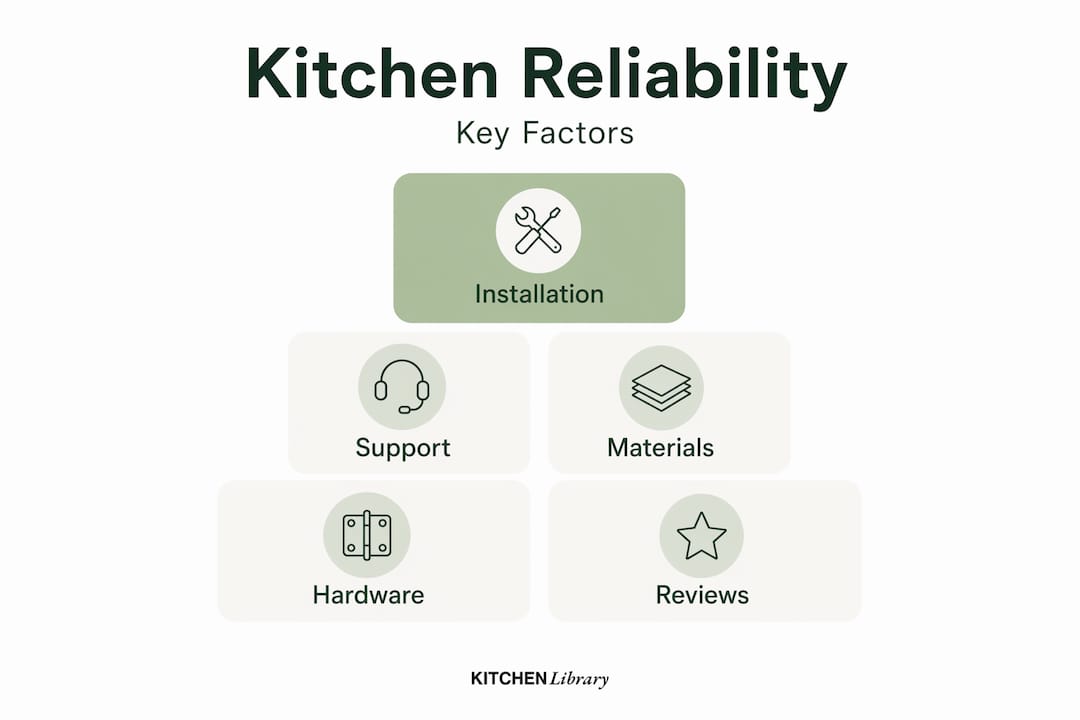
Before you look at colours, finishes, or brand names, you need a clear framework for what reliability actually means. A kitchen component is reliable when it performs its function consistently, can be serviced when something goes wrong, and does not create costly downtime.
Based on data from 33,190 service calls, better local support and certified installers prevent more problems than brand upgrades. That is a striking finding. It tells you that who fits your kitchen and who services it matters more than the logo on the box.
When researching brands, go beyond marketing materials. Look for kitchen component reviews from verified purchasers, and pay attention to what people say about the service experience after purchase, not just the initial quality. A product that is easy to repair locally is worth more than a premium product with no local service network.
Warranty terms deserve the same scrutiny as the product itself. Three key warranty questions to ask: How long is coverage? What is excluded? And what is the company’s remedy? Cosmetic parts are frequently excluded, and “at our option” clauses mean the manufacturer decides whether to repair or replace. Understand this before you buy.
Pro Tip: Ask your supplier directly: “If this fails in 18 months, who comes to fix it, and how quickly?” The answer tells you everything about real-world reliability.
- Confirm the installer is certified or has verifiable experience with the specific brand
- Check that replacement parts are stocked locally, not just available on overseas order
- Read the warranty exclusions section before the coverage section
- Ask about average repair turnaround times in your area
- Prioritise brands with an Australian service network over imported alternatives with no local presence
Cabinetry materials and finishes
The cabinet carcass is the backbone of your kitchen. Choose the wrong material and moisture, heat, and daily use will degrade it within a few years. Choose well and it holds its shape and finish for the life of the renovation.
Plywood is strong, stable, and moisture-resistant, making it the preferred choice for most Australian kitchens. Marine-grade plywood takes this further, with waterproof adhesive between layers, making it the right call for kitchens with high humidity or poor ventilation. MDF offers a smooth, paintable surface and is cost-effective, but it swells when exposed to moisture and is not suitable near sinks or dishwashers without proper sealing. Particleboard is the most affordable option and performs adequately in dry conditions, but it is the least forgiving of water exposure.
Longevity of cabinetry rests more on moisture management and realistic maintenance than on initial aesthetic choices. That means sealing edges properly, using appropriate finishes, and matching your material to your actual kitchen environment.
| Material | Durability | Moisture resistance | Maintenance | Cost |
|---|---|---|---|---|
| Plywood | High | Good | Low | Medium |
| Marine plywood | Very high | Excellent | Low | High |
| MDF | Medium | Poor | Medium | Low to medium |
| Particleboard | Low to medium | Poor | Medium to high | Low |
Surface finishes affect both appearance and upkeep. Laminate and melamine are durable, easy to clean, and resist scratching. UV-lacquer finishes offer a high-gloss result but show fingerprints and require careful cleaning. Solid timber looks exceptional but needs regular oiling or sealing and is sensitive to humidity changes.
Pro Tip: If your kitchen faces north or west and gets significant afternoon sun, UV-lacquer finishes can yellow over time. Opt for a two-pack polyurethane or laminate finish in sun-exposed kitchens.
Cabinetry hardware and accessories
Hardware is where many renovations fall short. Homeowners invest in quality carcasses and beautiful doors, then fit them with slides and hinges that fail within two years. The mechanical components you choose affect every single interaction with your kitchen.
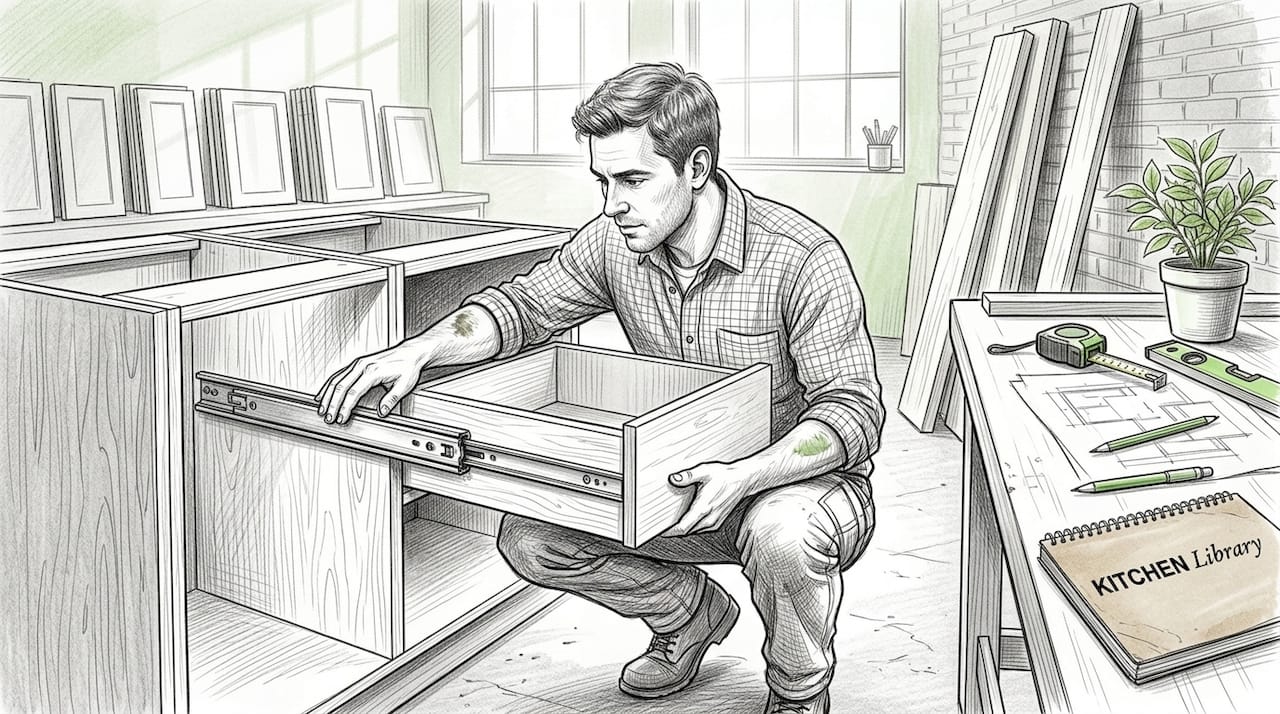
Slide and hinge weight ratings matter significantly. Poor hardware causes sagging pull-outs, sticking drawers, and doors that no longer close flush. These are not minor annoyances. They are daily frustrations that compound over time and often require full replacement rather than adjustment.
When selecting hardware, prioritise these features and avoid the listed pitfalls:
Must-have hardware features:
- Soft-close hinges rated for the door weight, not just the door size
- Drawer runners with a load rating at least 20% above the intended drawer contents
- Pull-out baskets and organisers from the same system as your cabinetry, to guarantee clearance
- Corner solutions (such as Le Mans or magic corner units) from reputable cabinet system suppliers
- Handles and knobs in finishes that match your cleaning habits (matte finishes hide fingerprints; polished finishes require more upkeep)
Common pitfalls to avoid:
- Buying generic slides that do not specify a load rating
- Fitting oversized pull-outs into cabinets without checking clearance on all sides
- Choosing decorative-only handles with thin fixings that loosen under daily use
- Mixing hardware from incompatible systems, which creates fitting problems during installation
Mechanical subsystems like drawer slides and hinges must meet weight ratings and clearance requirements to avoid premature failure. This is not a specification to guess at. Get the numbers from your cabinet supplier and match them exactly.
For quality cabinet hardware that meets these standards, the Angle Pull Handle Dark Brushed Brass from Kitchenlibrary is a strong example of hardware built for daily use without compromise.
Selecting small appliances and tools
Small appliances are often the most replaced items in a kitchen, yet most buyers focus on features and price rather than the factors that actually predict lifespan.
-
Assess the motor or heating element quality first. High quality motor and heating element protection from overheating are the best predictors of appliance lifespan. Look for brands that publish their motor specifications or have a track record in independent reviews.
-
Treat the warranty as a risk-transfer contract. A warranty clarifies the manufacturer’s operational risk acceptance. A five-year warranty with broad exclusions is worth less than a two-year warranty with clear, comprehensive coverage and a local repair centre.
-
Check repair versus replacement economics. For appliances under $200, replacement is usually more cost-effective than repair. For appliances over $500, local parts availability and repair turnaround time become significant factors in your total cost of ownership.
-
Match tool materials to your cookware. Stainless steel handles high heat and is dishwasher-safe; silicone protects nonstick coatings and is gentler on surfaces. Choose FDA-grade, BPA-free silicone with sealed handles for the best durability.
-
Use expert test kitchens as a filter. Food Network’s test kitchen selects reliable tools based on practical workflows rather than specifications, favouring usability and durability verified by real cooking conditions. These recommendations are a reliable shortcut when you do not have time to test everything yourself.
Finalising your selection: a practical checklist
Once you have identified your preferred components, the final step is verification before purchase and installation. This is where many DIY renovators skip steps and pay for it later.
| Verification step | What to confirm | Why it matters |
|---|---|---|
| Installer credentials | Certified or experienced with this specific brand | Installation errors cause most early failures |
| Parts availability | Stocked locally, not on overseas backorder | Reduces repair downtime significantly |
| Clearance measurements | All hardware fits within cabinet dimensions | Prevents costly reinstallation |
| Warranty exclusions | Read the full document, not the summary | Avoids surprises when making a claim |
| Service network | Local technician available within your postcode | Determines real-world repair turnaround |
Repair time and local parts supply significantly impact usability and costs beyond the initial purchase price. This is the factor most homeowners overlook until they are waiting three weeks for a part to arrive from overseas.
Before installation day, ask your supplier and installer these questions directly:
- What is the typical repair turnaround for this brand in my area?
- Are replacement parts for this model stocked in Australia?
- What installation steps are most commonly done incorrectly, and how will you prevent them?
- What maintenance should I plan for in the first two years?
Cabinet levelling, water connections, and electrical connections are installation details that are critical for reliability but frequently overlooked. A cabinet that is not perfectly level will stress hinges and drawer runners from day one, accelerating wear across the entire system.
Pro Tip: Ask your installer to show you the level readings on your base cabinets before the benchtop goes on. Once the benchtop is down, correcting an unlevel carcass becomes a major job.
My take on why kitchen renovations fail
I have seen a lot of kitchen renovations go wrong, and the pattern is almost always the same. Homeowners spend months choosing the right door profile and the perfect handle finish, then rush the decisions that actually determine how the kitchen performs.
The 40/60 rule on appliances is something I think every homeowner should know: installation and service access account for roughly 60% of long-term reliability, while the brand itself accounts for about 40%. Most people have this backwards. They pay a premium for a prestige brand and then have it installed by whoever is cheapest.
The hidden cost of downtime is real. A dishwasher that is out of service for three weeks while a part is sourced from overseas is not a minor inconvenience. It disrupts daily life significantly. I have spoken with homeowners who would have chosen a different brand entirely if they had known the local service network was inadequate.
For DIY enthusiasts, my honest advice is this: spend the extra time on hardware specifications and installation planning, not just aesthetics. A durable cabinet handle that fits correctly and is rated for daily use will outlast a beautiful but poorly specified alternative by years. Reliability and aesthetics are not mutually exclusive. You just have to know what to look for.
— Jessica
Find reliable kitchen hardware at Kitchenlibrary
If you are ready to put this advice into practice, Kitchenlibrary makes it straightforward. Their curated range of cabinet hardware and handles is selected specifically for Australian renovators and professionals, with a focus on durability, correct specifications, and finishes that hold up to daily use.

Kitchenlibrary stocks handles, knobs, and cabinet accessories that meet the weight ratings and clearance standards covered in this guide. Whether you are after a brushed nickel cup pull or a matte black bar pull, every product is chosen to complement modern cabinetry systems and perform reliably over time. Their team understands the difference between hardware that looks good on day one and hardware that still works perfectly five years later. That distinction is built into every product they stock.
FAQ
What is the most reliable cabinet material for Australian kitchens?
Plywood and marine-grade plywood offer the best combination of moisture resistance and structural stability for Australian conditions. Marine plywood is the preferred choice for kitchens with high humidity or poor ventilation.
How do I assess a kitchen appliance warranty properly?
Read the exclusions section before the coverage summary, and confirm what the manufacturer’s remedy is. A warranty that gives the manufacturer the option to repair or replace at their discretion offers less protection than one with clear, defined remedies.
Why does installation quality matter more than brand?
Based on analysis of service call data, installation and local service access account for the majority of long-term reliability outcomes. A premium product installed incorrectly will fail faster than a mid-range product installed by a certified professional.
What should I check before buying cabinet hardware?
Confirm the weight rating of drawer slides and hinges matches your intended load, verify clearance dimensions against your cabinet interior, and check that the hardware is compatible with your cabinetry system to avoid fitting problems during installation.
How do I know if local parts and service are available?
Ask your supplier directly which service centres stock parts for the brand in your area, and request an estimate of typical repair turnaround times. If the answer is vague or relies on overseas supply, factor that risk into your purchasing decision.



Comments (0)
There are no comments for this article. Be the first one to leave a message!