
Most homeowners spend hours choosing cabinet door styles and finishes, then give almost no thought to what the cabinet box itself is made from. That’s a costly oversight. Why cabinet box material matters comes down to one simple fact: the box is the structure. It holds the shelves, supports the drawers, anchors the hinges, and carries the weight of everything you store. Get the material wrong, and no amount of beautiful door fronts will save you from sagging shelves, stripped screws, and cabinets that fail years before they should.
Table of Contents
- Key Takeaways
- Why cabinet box material matters more than you think
- Comparing the most common cabinet box materials
- Environmental and installation factors that affect performance
- How material choice affects long-term renovation value
- My take on the most overlooked part of any kitchen renovation
- Build it right with Kitchenlibrary
- FAQ
Key Takeaways
| Point | Details |
|---|---|
| Box material drives durability | The cabinet box bears all structural loads, making material choice more critical than door finish. |
| Plywood outperforms particleboard | Plywood’s cross-grain construction resists moisture and holds screws far better than particleboard. |
| Humidity is the biggest threat | Homeowners in humid climates should prioritize marine-grade or high-quality plywood to prevent structural failure. |
| Upfront cost vs. long-term value | Plywood costs more initially but lasts decades longer, reducing repair and replacement expenses. |
| Hybrid builds balance both | Plywood boxes paired with MDF or decorative doors deliver performance and aesthetics at a practical price. |
Why cabinet box material matters more than you think
The cabinet box is the skeleton of every cabinet in your kitchen. It’s the four walls, the floor panel, and the back panel that hold everything together. Doors and drawer fronts get all the attention, but they’re purely decorative. The box does the real work.
Every shelf you load with plates, every drawer you pull open, every pot you stack inside puts stress on that box. The material it’s made from determines how well it handles that stress over years and decades of daily use. It affects how firmly screws grip, how well the cabinet resists moisture from cooking and dishwashers, and whether the structure stays square and rigid or slowly twists and sags.
Pro Tip: When evaluating cabinets in a showroom, open a drawer and look inside the box itself. The material you see on the interior walls tells you far more about long-term quality than the door finish ever will.
Here’s what cabinet box material directly controls:
- Screw-holding strength. Hinges, drawer runners, and shelf pins all rely on screws biting firmly into the box wall. Weak materials strip easily.
- Moisture resistance. Kitchen environments generate humidity constantly. Materials that absorb moisture swell, warp, and delaminate.
- Load capacity. A full pantry cabinet can hold hundreds of pounds. The box material must support that load without flexing.
- Structural rigidity. A box that stays square keeps doors aligned and drawers sliding smoothly for years.
- Hardware compatibility. Quality drawer runners and soft-close hinges only perform as designed when the box material holds them securely.
Comparing the most common cabinet box materials
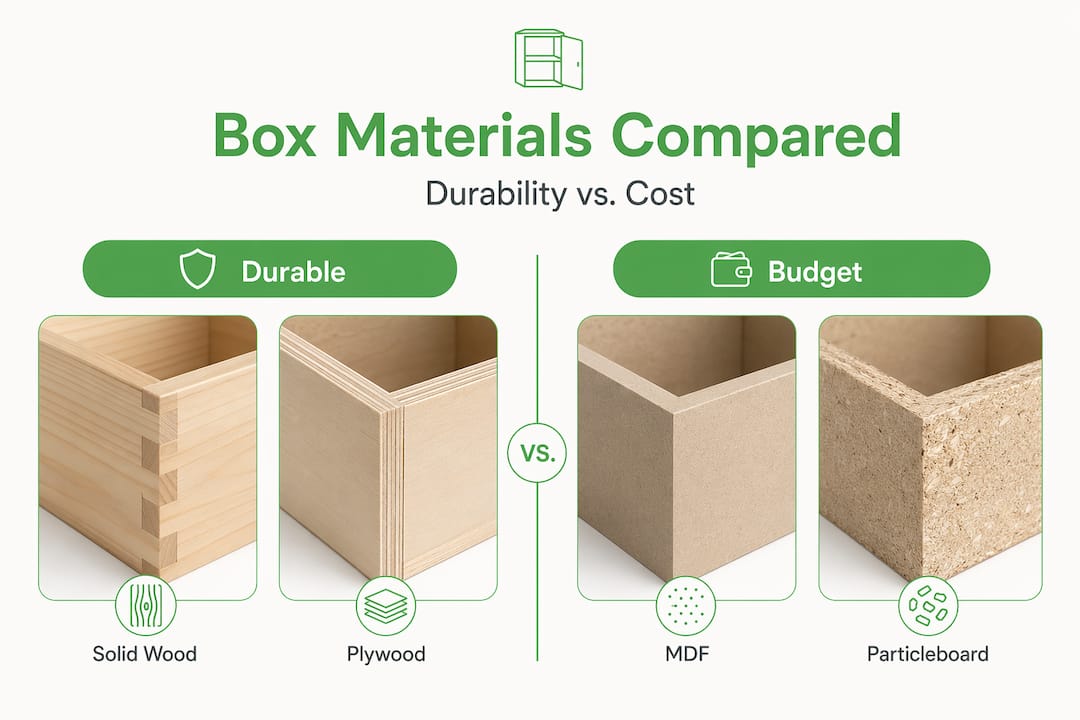
Understanding the types of cabinet materials available is the foundation of any smart cabinet purchase. Each option has genuine strengths, real weaknesses, and a place where it makes sense.
Solid wood
Solid wood boxes are rare in production cabinetry today, mostly found in custom work. They’re durable and hold screws extremely well. The downside is cost and movement. Wood expands and contracts with humidity changes, which can cause joints to open or panels to crack over time. For most homeowners, solid wood boxes are an expensive choice that plywood largely matches in performance.
Plywood
Plywood is widely considered the industry standard for quality cabinet boxes. Its cross-grain construction, where each layer of wood runs perpendicular to the one above it, gives it superior screw-holding strength and natural resistance to warping. It handles moisture far better than particleboard and maintains structural integrity under heavy loads.
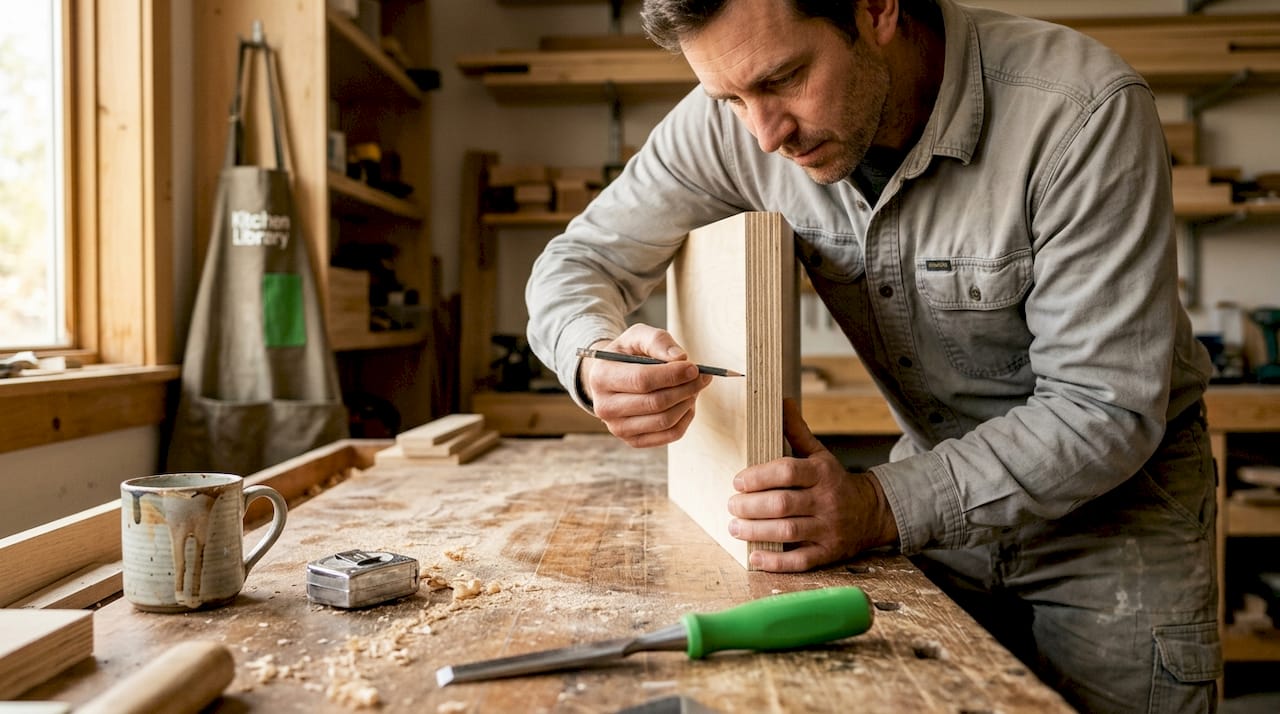
Solid wood and plywood boxes can last 20 to 50 years or more with proper care. That lifespan is a direct result of the material’s density, stability, and resistance to environmental stress. Not all plywood is equal, though. Panels with internal voids weaken screw holding, and raw cut edges wick moisture and cause delamination if left unsealed. Always ask about panel grade and edge treatment.
MDF (medium density fiberboard)
MDF has a smooth, consistent surface that takes paint exceptionally well, which is why it’s popular for door fronts. For cabinet boxes, it’s a more complicated choice. MDF cabinets typically last 15 to 20 years with proper care, but standard MDF is vulnerable to moisture. It swells at the edges when wet and does not recover. Moisture-resistant MDF variants exist but are not fully waterproof. MDF also holds screws reasonably well in dry conditions, but repeated removal and reinstallation degrades the material quickly.
Particleboard
Particleboard is the most budget-friendly option and the one that causes the most regret. It’s made from compressed wood chips and resin, which makes it heavy but structurally weak. Particleboard cabinets often only last 5 to 10 years in kitchen conditions because moisture causes swelling and crumbling that cannot be reversed. It may be acceptable for upper cabinets in very dry environments, but in base cabinets near sinks or dishwashers, it’s a liability.
Pro Tip: Ask your cabinet supplier for the panel thickness, not just the material name. A 3/4-inch plywood box is meaningfully stronger than a 5/8-inch one. Thickness matters alongside material type.
| Material | Typical lifespan | Moisture resistance | Screw-holding | Relative cost |
|---|---|---|---|---|
| Solid wood | 30 to 50+ years | Moderate | Excellent | High |
| Plywood | 20 to 50+ years | Good to excellent | Very good | Medium to high |
| MDF | 15 to 20 years | Poor to moderate | Good (dry only) | Medium |
| Particleboard | 5 to 10 years | Poor | Fair | Low |
Environmental and installation factors that affect performance
Choosing the right material is only part of the equation. How that material is installed and finished determines whether it reaches its full lifespan or fails years early.
Kitchen humidity is the most persistent threat to cabinet boxes. In humid climates, indoor humidity can range from 50 to 70 percent, and materials like particleboard and low-grade MDF absorb that moisture steadily. Homeowners near coastlines or in tropical regions should treat marine-grade or high-quality plywood as a non-negotiable specification, not an upgrade.
Edge sealing is equally critical. Proper edge sealing and quality joinery dramatically improve plywood cabinet durability by blocking moisture entry at cut edges. A dado joint, where the back panel sits in a routed groove rather than being stapled on, adds significant structural rigidity. Cabinets with stapled-on backs flex and rack over time. Dado-joined backs do not.
Pro Tip: Run your hand along the interior edges of a cabinet box before purchasing. Sealed, smooth edges indicate quality finishing. Rough, unsealed edges are a warning sign regardless of what material is used.
Installation errors are also a common source of premature cabinet failure. Over-tightening screws strips plywood fibers, reducing holding strength and shortening cabinet life. Proper pilot holes and controlled screw depth are simple practices that protect the material’s integrity. If you’re hiring an installer, ask specifically about their screw installation technique. It’s a small detail with a large long-term impact.
Key environmental and installation factors to watch:
- Seal all raw cut edges before installation to prevent moisture wicking
- Use dado joints for back panels rather than staples or nails
- Drill pilot holes before driving screws, especially near panel edges
- Specify marine-grade plywood for cabinets near sinks, dishwashers, or in humid climates
- Check that cabinets are level and square during installation to prevent door and drawer misalignment
How material choice affects long-term renovation value
Cabinetry typically accounts for 30 to 50 percent of a kitchen renovation budget. That makes it one of the largest single investments in the entire project. Choosing box materials wisely directly affects how long that investment lasts and how much it costs to maintain.
The math on particleboard is straightforward and unfavorable. A lower upfront cost looks attractive, but cabinets that require replacement in 7 years cost more over a 20-year period than plywood cabinets purchased once. Add in the disruption of a mid-decade renovation and the appeal of saving money upfront fades quickly.
| Scenario | Upfront cost | Replacement frequency | 20-year total cost |
|---|---|---|---|
| Particleboard boxes | Low | Every 5 to 10 years | High (multiple replacements) |
| Plywood boxes | Medium to high | Once (20 to 50 years) | Low to medium |
| Solid wood boxes | High | Rarely needed | Medium to low |
Resale value is another consideration. Buyers and home appraisers increasingly recognize plywood construction as a quality marker. Kitchens with plywood box cabinets are a selling point. Kitchens with failing particleboard boxes are a negotiation liability.
The hybrid approach is worth serious consideration for homeowners balancing budget and performance. Plywood boxes with painted MDF door fronts deliver the structural durability where it counts most, while keeping door costs manageable. The box never fails early, and the doors look exactly as intended. Investing in box material and hardware rather than decorative finishes yields better daily durability and a longer overall lifespan.
Key value considerations when selecting cabinet box materials:
- Prioritize plywood for base cabinets, especially near water sources
- Use particleboard only in dry upper cabinet locations where loads are light
- Factor in replacement costs, not just purchase price, when comparing materials
- Ask builders for written confirmation of box material type and panel grade
- Pair quality box materials with quality hardware for the best long-term outcome
My take on the most overlooked part of any kitchen renovation
I’ve reviewed enough kitchen renovations to know where the regret usually lives. It’s almost never in the door color or the handle style. It’s in the box.
What I see repeatedly is homeowners spending serious money on premium door finishes, custom paint colors, and designer hardware, then accepting whatever box material the builder specifies without question. Six years later, the base cabinet next to the dishwasher is swelling. The shelf is sagging. The drawer runner is pulling away from the wall because the screw has nothing left to grip.
The uncomfortable truth is that a well-built cabinet requires quality box material, sound joinery, and durable hardware working together. You can’t compensate for a weak box with a beautiful door. The structure either holds or it doesn’t.
My advice is direct: ask for the box material specification in writing before you sign anything. Ask for the panel grade. Ask how the edges are treated and how the back panel is attached. If a supplier can’t answer those questions clearly, that tells you something important about the product they’re selling.
Aesthetics matter. But they sit on top of structure. Get the structure right first, and the aesthetics will last long enough to actually enjoy.
— Jessica
Build it right with Kitchenlibrary
When you invest in quality cabinet box materials, the hardware you pair with them should match that standard. At Kitchenlibrary, every product in the range is selected for durability, precision fit, and long-term usability. From soft-close cabinet hardware to precision drawer runners and handles built to complement solid cabinetry, the selection is curated for renovators who care about how their kitchen performs, not just how it looks on day one. Whether you’re fitting out a new build or upgrading an existing kitchen, explore options like the angle pull in dark brushed brass or the Como Knob in brushed nickel, hardware designed to work with quality cabinetry for decades of smooth, reliable use.
FAQ
What is a cabinet box and why does it matter?
The cabinet box is the structural shell of a cabinet, including the side walls, floor, and back panel. It supports all hardware, shelves, and loads, making the material it’s built from the primary factor in cabinet durability.
What is the best material for cabinet boxes?
Plywood is widely considered the best cabinet box material due to its cross-grain construction, moisture resistance, and superior screw-holding strength. Solid wood performs similarly but costs more and is less common in production cabinetry.
How long do particleboard cabinets last?
Particleboard cabinet boxes typically last 5 to 10 years in kitchen conditions before moisture damage causes swelling, sagging, and structural failure. Plywood and solid wood boxes last 20 to 50 years or more.
Does cabinet box material affect resale value?
Yes. Plywood box construction is recognized as a quality indicator by buyers and appraisers. Cabinets showing particleboard failure can reduce perceived home value and become a point of negotiation during sale.
Can I mix cabinet box materials in one kitchen?
Yes, and it’s a practical approach. Using plywood boxes for base cabinets near water sources and particleboard for dry upper cabinets can reduce costs without sacrificing durability where it matters most.



Comments (0)
There are no comments for this article. Be the first one to leave a message!